Showing posts with label Alzheimer. Show all posts

Friday, February 22, 2013

7 Foods That Reduce Your Alzheimer’s Risk | Keep your brain healthy with these foods that can slow down—or perhaps even help prevent—the disease


7 Foods That Reduce Your Alzheimer’s Risk

Keep your brain healthy with these foods that can slow down—or perhaps even help prevent—the disease.


Keep Your Brain Healthy
The best thing you can do to keep your brain working the way you want it to: exercise, and eat right. "Nutrition is very, very important to brain health," says Paul Nussbaum, Ph.D., a clinical neuropsychologist and member of scientific advisory board for the Alzheimer’s Foundation of America. "Surprisingly, the brain is made up of 60% fat—it’s the fattest part of our body—and that fat insulates the nerve tracks. Without that fat we slow down mentally," Dr. Nussbaum says.
The crucial thing to know: The kinds of fats and foods you eat, can have a real impact on the health of your brain. Trans fats and sugar aren't great for your brain health. What foods are good and can reduce your risk of Alzheimer’s? Consider eating these good-for-your-brain foods:


1. Walnuts (and almonds, pecans, hazelnuts)
Walnuts might be small in size, but they pack a big nutritional punch. They are filled with Omega-3 fatty acids, the good kind of fat your brain needs. A study from the New York State Institute for Basic Research in Developmental Disabilities found that mice given a diet including walnuts showed improvement in memory and motor coordination. Walnuts also contain vitamin E and flavonoids, which can help protect the brain.


2. Salmon (and mackerel, sardines, other fatty fish)
Also high in Omega-3s, fatty fish like salmon can lower blood levels of beta-amyloid, a protein thought to play a role in Alzheimer’s. A Columbia University study found that the more Omega-3 fatty acids a person eats, the lower their blood beta-amyloid levels. Dr. Nussbaum suggests eating 8 oz. of fish per week—fresh fish is best, but you can also talk to your doctor about taking a fish oil supplement.


3. Berries
“Antioxidants are like taking out the broom in the spring and sweeping the garage,” Dr. Nussbaum says. “Antioxidants are the body’s broom.” Berries contain polyphenols, a type of antioxidant which helps stop inflammation and allows brain cells to work better. A Tufts University study found that berries can reverse slow-downs in the brain’s ability to process information.
“You can’t go wrong if a food has the word ‘berry’ in the name,” says Dr. Nussbaum. “Strawberries, blueberries, cranberries— they’re all good for your brain.”


4. Spinach (and kale, other leafy greens)
Full of antioxidants and fiber, leafy greens should be a diet staple. In a national study, women in their 60s who ate more leafy vegetables over time did better than their non-greens-eating counterparts on memory, verbal, and other tests. And new studies show that high levels of vitamin C, which is found in spinach, may help with dementia prevention.


5. Turmeric
Break out the curry! A host of studies have shown that turmeric, the spice used in curries, and its main active component curcumin, can help prevent Alzheimer's. In one such study, researchers from UCLA found that vitamin D3, taken with curcumin, may help the immune system to get rid of the amino acids that form the plaque in the brain that's associated with Alzheimer’s Disease. So the next time you cook, incorporate this healthy spice.


6. Coffee
Now you don’t have to feel guilty about pouring yourself another cup. Researchers from the University of South Florida and University of Miami found that people older than 65 who drank three cups of coffee a day (i.e. had higher blood levels of caffeine) developed Alzheimer's disease two to four years later than their counterparts with lower caffeine levels, and that caffeine had a positive impact even in older adults who were already showing early signs of Alzheimer's.


7. Chocolate
If you haven’t already switched from milk chocolate to dark, now you have one more reason to. Compelling research already shows that dark chocolate, which contains flavonoids (a plant compound that helps with the body’s circulation), can help combat heart disease, but flavonoids may also help slow down the effects of dementia. In an Italian study, older adults who had mild symptoms of dementia drank cocoa with high, medium and low amounts of flavonoids. Those who consumed high amounts outperformed those who consumed low doses on cognitive tests.
And a study is currently underway by the National Institute on Aging to see whether resveratrol, a compound found in chocolate, red wine, and grapes, can prevent dementia. One tip: A healthy choice is dark chocolate that has a 70% or higher cocoa content.


Monday, July 30, 2012

14 Best Anti-Cancer Super Fruits | Anti-Cancer | Prevent Cancer with Super Fruits

14 Best Anti-Cancer Super Fruits


Many types of cancer are induced by the food we eat. Cancer can also be prevented or helped by adding super fruits to our diet. 

Here are the Top 14 best anti-cancer super fruits and why they are so good for you: 

BLUEBERRIES 
Researchers have shown blueberries contain pterostilbene, anthocyanins, proanthocyanidins, resveratrol, flavonols, and tannins, which inhibit mechanisms of cancer cell development. Besides this, blueberry can also alleviate the effects of Alzheimer’s disease, prevent urinary tract infections, and reduce blood sugar.


GRAPES
A grape is a perennial and deciduous woody vine. Its berries can be eaten raw or be made into juice, jam, jelly, wine, raisins, and others. Grapes are found in almost all parts of the world. Grapes contain phytochemicals such as resveratrol which has been positively implicated to inhibit any type of cancer.

DRAGON FRUIT
Dragonfruit is rich in phytoalbumin antioxidants which help carcinogenic free-radical formation in the body. It is also rich in fiber, calcium, phosphorus, and vitamins C and B2, as well as its helps excrete metal toxins from the body.


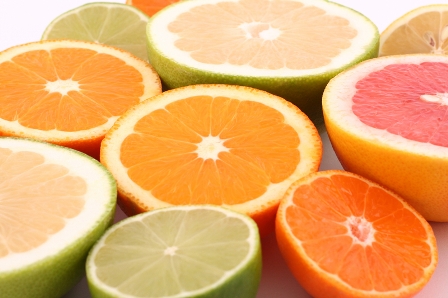
CITRUS FRUITS
Citrus fruits include orange, lemon, grapefruit, etc. This kind of fruits contains a large number of bioflavonoids, which can enhance the activity of certain enzymes in human skin, lung, stomach and liver, and change the fat-soluble carcinogenic substance into water-soluble, so as to make them not easy to be absorbed and can be expelled out of the body. At the same time, they can enhance the absorptive capacity of vitamin C by the human body. Vitamin C is an important cancer substance, which can enhance human immunity, prevent the formation of nitrosamines--a strong carcinogen. What's more, it also has certain effect in the prevention and treatment of gastrointestinal cancer.

A study published a few years ago in the journal Nutrition and Cancer, for instance, found that people who consume the highest amounts of flavonoids and proanthocyanidins, a subgroup of flavonoids, were 44 percent less likely to develop oral cancer, 40 percent less likely to develop laryngeal cancer, and 30 percent less likely to develop colon cancer compared to others.


AVOCADO
Avocados contain lutein, an anti-cancer carotenoid. Lutein lowers the risk of prostate cancer in men and protects eyes against fatal diseases like macular degeneration and cataracts. Another cancer-fighting component of avocado is glutathione that can significantly cuts the incidence of oral and pharyngeal cancer. Avocados are also rich in potassium, vitamins, and heart-healthy fats.


STRAWBERRIES
Anti cancer action is actually related to the polyphenols contained in the berries, rather than in their antioxidant potential, as is commonly assumed. A diet containing a high proportion of strawberries or raspberries (5% or more of total diet) in animals, has been found to significantly decrease the number of esophageal tumors triggered by NMBA, a known powerful carcinogen. Ellagic acid appears to prevent the activation of carcinogenic substances into cellular toxins, causing them to lose their ability to react with DNA and induce mutations capable of triggering the onset of cancer. In addition, strawberry also contains a kind of amine substance, which has good effect in the prevention of leukemia and other diseases related with blood.


ACAI BERRIES
Laboratory studies have shown that acai berries can kill off cancer cells. Extracts from the berries can induced the death of leukemia cells. Other beneficial contents of acai are its antioxidants (found to be twice than in blueberries), omega fatty acids, protein, vitamins A and C, iron, and fiber.


NONI
According to recent studies, noni has properties that may be beneficial in preventing cancer. The extract from the tropical plant indicates some anti-cancer properties useful for the immune system. Moreover, noni contains carbohydrates, dietary fibers, niacin, calcium, iron and potassium.


GOJI BERRIES
It has been found out that goji berries contain selenium, a trace mineral that acts an antioxidant which can neutralize free radicals that damage cells and cause cancer. Goji berries are also rich in other nutrients and phytochemicals like amino acids, carotenoids like beta-carotene and zeaxanthin, polysaccharides, antioxidants, calcium, potassium, iron, zinx, and riboflavin.


MANGOSTEEN
Mangosteen is anti-cancer and helps cancer prevention.
Various studies have shown that phytoceuticals in Mangosteen (in some cases known to be its xanthones) have properties such as: anti-tumor (shrinks tumors), anti-leukemia, antifungal (critical for all cancer patients), antibacterial (to protect DNA), antioxidants (at least two dozen different kinds of xanthones are in the mangosteen fruit), antiproliferation, kills cancer cells and causes apoptosis (programmed cell death) for some types of cancer. This is a pretty impressive list of cancer credentials!

This fruit has countless health benefits like ant-ulcer, anti-aging, antiviral, antibiotic, antifungal, anti-depressant, anti-obesity, anti-allergenic, anti-cataract, and many more.

Mangosteen also contains: catechins, polyphenols, minerals and vitamins.


SOURSOP
Soursop has anti-cancer characteristics and is best for all types of cancer. The fruit is also anti-stress, anti-bacterial, antifungal, anti-depressant, and anti-worms.


POMEGRANATE
Studies have reported that the fruits contain phytochemicals that can suppress aromatase, an enzyme which converts androgen into estrogen and which is associated with breast cancer. Furthermore, clinical trials have shown the pomegranate extracts can prevent prostate cancer in men.


KIWI
Kiwi contains plenty of vitamins, especially vitamin C, the content of which is 4 to 12 times as that of orange. Through the researches in recent years, it is confirmed that kiwi contains a kind of active ingredient, which can block the formation of carcinogenic "nitrosamines" in the human body. As a result, it has a good effect in preventing cancer.

APPLE
Apple peels contain as many as a dozen cancer-fighting chemical compounds, according to a study conducted by researchers at Cornell University and published in the Journal of Agricultural and Food Chemistry.

"We found that several compounds have potent anti-proliferative activities against human liver, colon and breast cancer cells, and may be partially responsible for the anti-cancer activities of whole apples," said Rui Hai Liu, an associate professor of food science.

The researchers extracted each individual chemical compound found in the peels of 230 pounds of Red Delicious apples. They then tested these compounds individually against cultures of cancer cells in the laboratory. They identified 12 compounds, called triterpenoids, which inhibited the growth of cancer cells or even killed them.


Source: 

pguims-random-science.blog
spot.com, lookchem.com, cancertutor.com, valeriebelew.hubpages.com, naturalnews.com
http://www.facebook.com/photo.php?fbid=342343545843665&set=a.251117714966249.57830.250949118316442&type=3&theater

Source of Photos:
http://www.jobodesigns.com/post/2009/05/03/Natural-Dyeing-Series-Blueberries.aspx
http://grapesweb.com/
http://trec.ifas.ufl.edu/tfphotos/012304.htm
http://verastic.com/site/wp-content/uploads/2012/06/citrus-fruits.jpg
http://www.goodground.com/wp-content/uploads/2012/03/Avocados.pdf
http://www.grit.com/uploadedImages/GRT/articles/issues/2010-07-01/GRT-JA10-strawberries-onvine-i.jpg
http://www.acaiberryfruits.net/acai-berry-colon-cleansing.html
http://healthiersteps.com/NaturalRemedies/tabid/72/entryid/67/10-Amazing-Health-Benefits-of-Noni.aspx
http://www.puregoodness.net/wp-content/uploads/2011/12/goji.jpg
http://herbalmedicalinstitute.com/Medical_Marijuana_Medicine/920/mangosteen
http://care4healthy.com/wp-content/uploads/2011/01/sirsak.jpg
http://www.guardian.co.uk/lifeandstyle/wordofmouth/2011/feb/01/consider-pomegranate
http://howmanycaloriesinasliceofpizza.net/how-many-calories-in-a-kiwi-with-skin/
http://www.fatburningfurnace.com/blog/surprising-apple-nutrition-facts-%E2%80%93-health-benefits-of-apples